
Cadillac Lyriq is a luxury all-electric SUV equipped with selectable driving modes that adjust performance, comfort, and efficiency. Many owners ask if these modes change the driving range or battery usage.
The short answer is yes, they can influence how quickly energy is consumed, but they do not change the physical battery capacity. Battery size and chemistry remain constant.
What changes is how software manages and delivers that energy during acceleration, deceleration, and traction events.
That is precisely what we want to talk about in greater detail.
ALSO READ: Take your time to check out our list of car models from famous movies!
How Driving Modes Work in the Cadillac Lyriq
Cadillac Lyriq uses advanced software calibration to shape how power, efficiency, and traction behave in daily driving. Hardware inside the vehicle remains constant, yet driver experience can feel noticeably different depending on the selected mode.
Adjustments occur instantly through electronic control systems that manage torque output, regenerative braking, steering feel, and stability responses.
Driving modes as software profiles
Driving modes in the Cadillac Lyriq operate as software-controlled profiles that recalibrate multiple vehicle systems at once.
Ultium battery pack size, usable capacity, and chemistry remain identical in every setting. No physical changes occur inside the battery when switching modes.
Energy management software determines how power is requested and delivered to the electric motors. That calibration influences both performance feel and energy consumption.
- Throttle mapping sensitivity
- Regenerative braking intensity
- Steering weight and feedback
- Traction and stability control thresholds
Each parameter influences how aggressively energy leaves the battery and how efficiently energy returns during deceleration. Faster torque requests increase consumption per mile. Stronger regeneration improves recovery during slowdowns and downhill driving.
Consistency across modes in terms of battery capacity remains important. Cadillac Lyriq always retains the same total usable kilowatt hours. The difference lies in how quickly those kilowatt hours are consumed.
Throttle mapping and power delivery
Throttle mapping defines how accelerator pedal input translates into motor torque. Cadillac Lyriq adjusts this relationship depending on the selected mode.
Sport Mode sharpens throttle response significantly. Small pedal movements generate stronger torque output, which produces quicker acceleration. That responsiveness improves merging and passing performance, yet it also increases energy demand. Higher current flows to the motors during rapid acceleration events.
Tour Mode softens throttle calibration. Power delivery becomes smoother and more progressive. Instead of an immediate peak torque, output builds in a controlled manner.
- Reduced energy spikes during acceleration
- More predictable consumption patterns
- Improved ability to approach the EPA estimated range
Gradual torque application reduces wasted energy during frequent stop-and-go driving. Cadillac Lyriq in Tour Mode typically consumes energy at a steadier rate, especially in urban commuting.
My Mode can alter throttle behavior as well. Drivers who select higher sensitivity will experience consumption patterns similar to Sport Mode. Drivers who choose moderate sensitivity will see results closer to Tour Mode.
@omardrives The Cadillac Lyriq is a very simple luxury EV to drive! #cadillac #lyriq #luxurycar #dreamcar #cartok #carcommunity ♬ original sound – omardrives
Regenerative braking behavior
Regenerative braking plays a major role in how the Cadillac Lyriq manages efficiency. Electric motors reverse function during deceleration and act as generators, converting kinetic energy into electrical energy stored back in the battery.
Driving modes influence how strong the regenerative effect feels. Lifting off the accelerator in an efficiency-focused setting often produces noticeable deceleration. Stronger regeneration increases energy recovery in everyday traffic.
Performance-oriented settings may reduce regenerative intensity to create a smoother coasting sensation. That adjustment changes how much energy is captured during each slowdown. Over time, those differences add up.
The effect of regeneration strength becomes more visible in city driving, where frequent braking events occur. In highway cruising, impact remains smaller because fewer deceleration events take place. Cadillac Lyriq relies heavily on regeneration in stop-and-go traffic to improve overall efficiency.
Overview of Cadillac Lyriq Driving Modes
Cadillac Lyriq offers multiple selectable modes designed to match road conditions and driver preference. Differences appear in throttle behavior, steering feedback, traction intervention, and regeneration levels.
Tour Mode, everyday efficiency
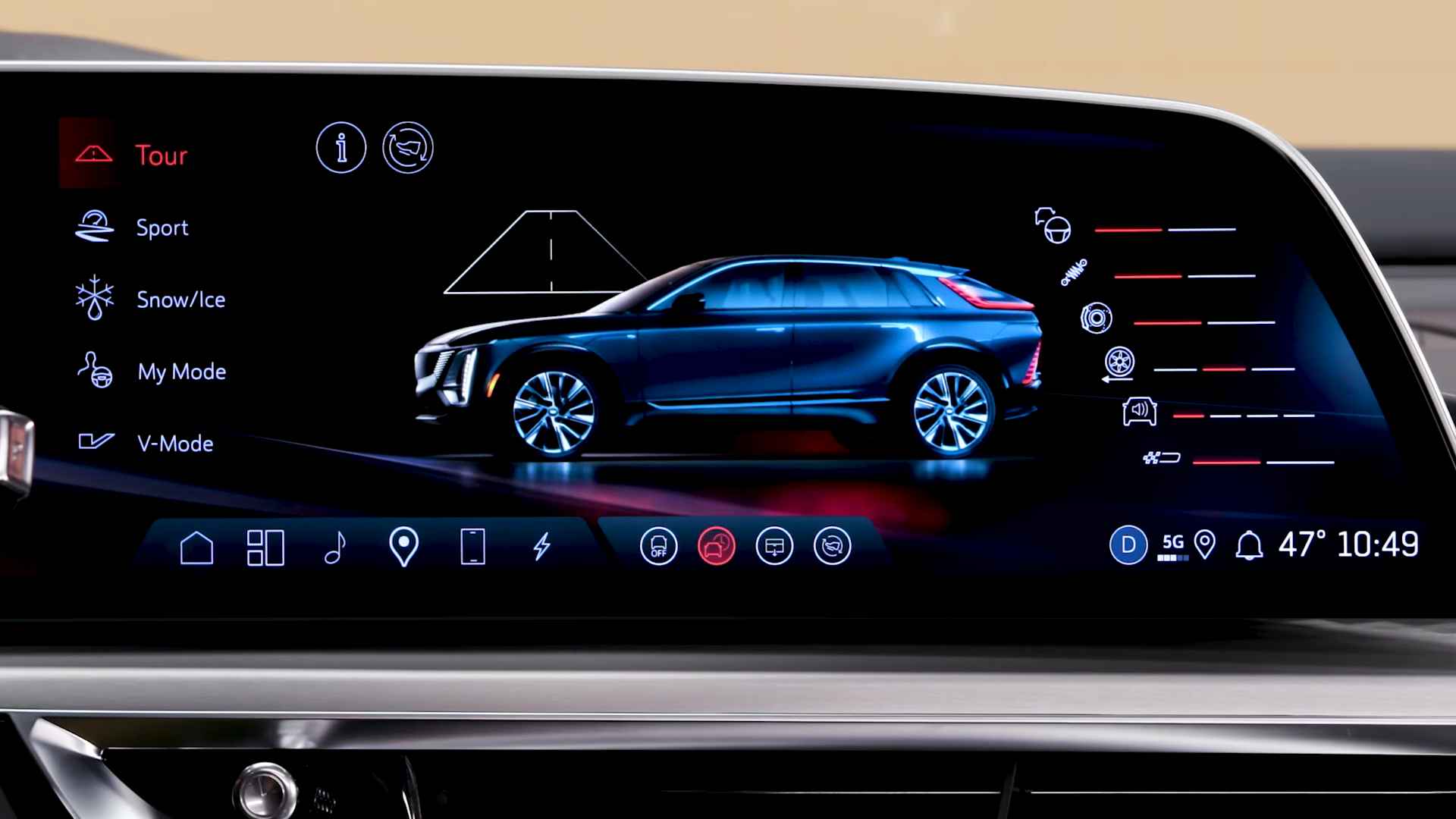
Tour Mode functions as the default balanced configuration in Cadillac Lyriq. Acceleration feels smooth, steering remains moderate, and regenerative braking supports efficient energy recovery.
Range performance in this setting typically aligns most closely with official EPA estimates. Predictable throttle mapping and consistent regeneration allow drivers to maintain stable consumption levels.
- Daily commuting in mixed city and highway traffic
- Long highway trips with steady speeds
- Driving focused on maximizing miles per charge
Cadillac Lyriq in Tour Mode generally offers the most consistent efficiency profile across varying conditions.
Sport Mode, performance-focused
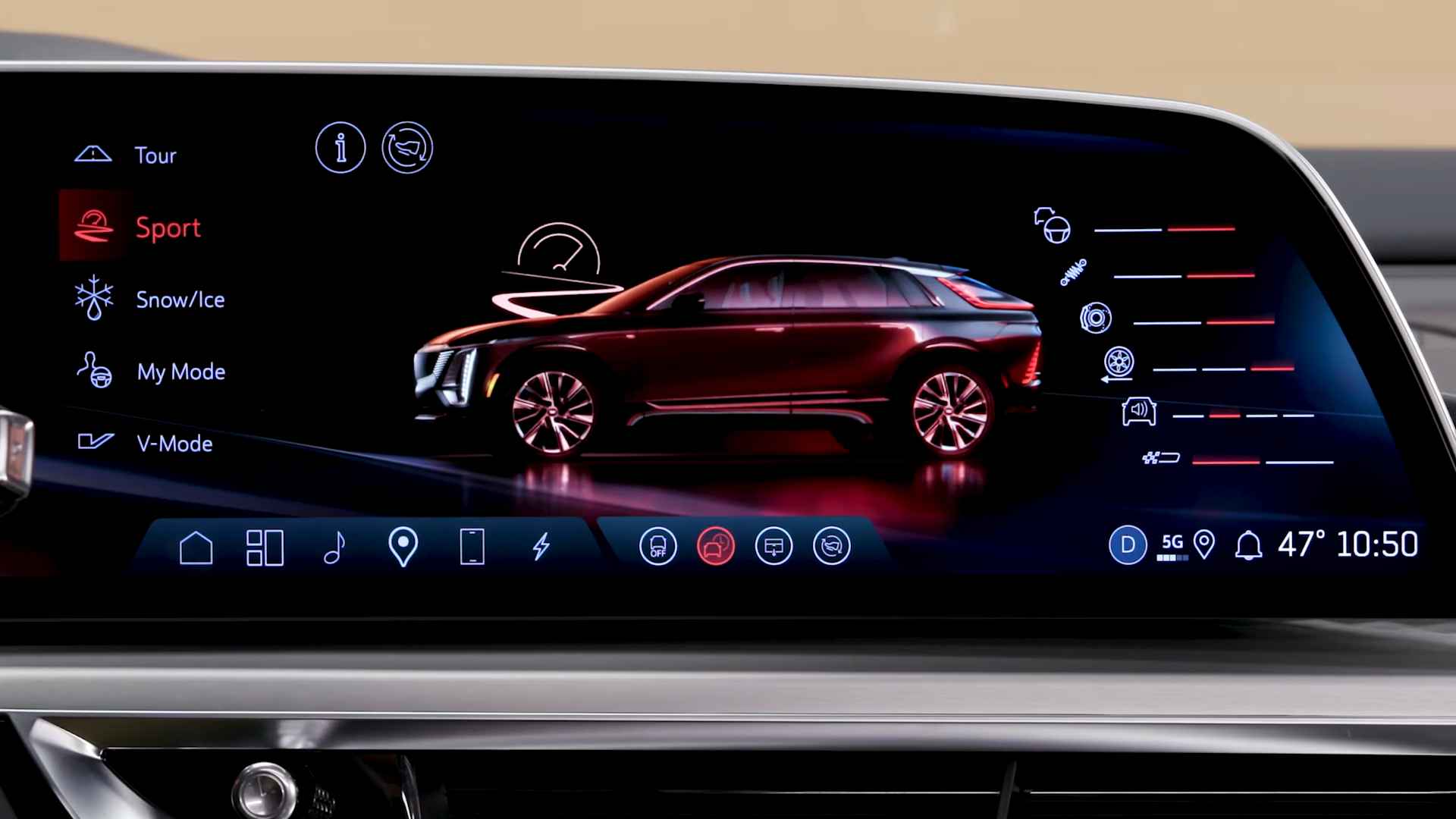
Sport Mode increases throttle sensitivity and provides a heavier steering feel. Motor response becomes immediate, giving the Cadillac Lyriq stronger acceleration characteristics.
Energy draw rises during assertive driving in this configuration. Real-world range commonly decreases by roughly 5% to 15% in typical use due to sharper throttle mapping and performance-oriented calibration. Drivers often notice quicker drops in projected range when accelerating aggressively.
Sport Mode suits scenarios such as highway merging, quick lane changes, and spirited driving on open roads. Trade off appears in higher energy consumption per mile.
Snow or Ice Mode, low-traction conditions
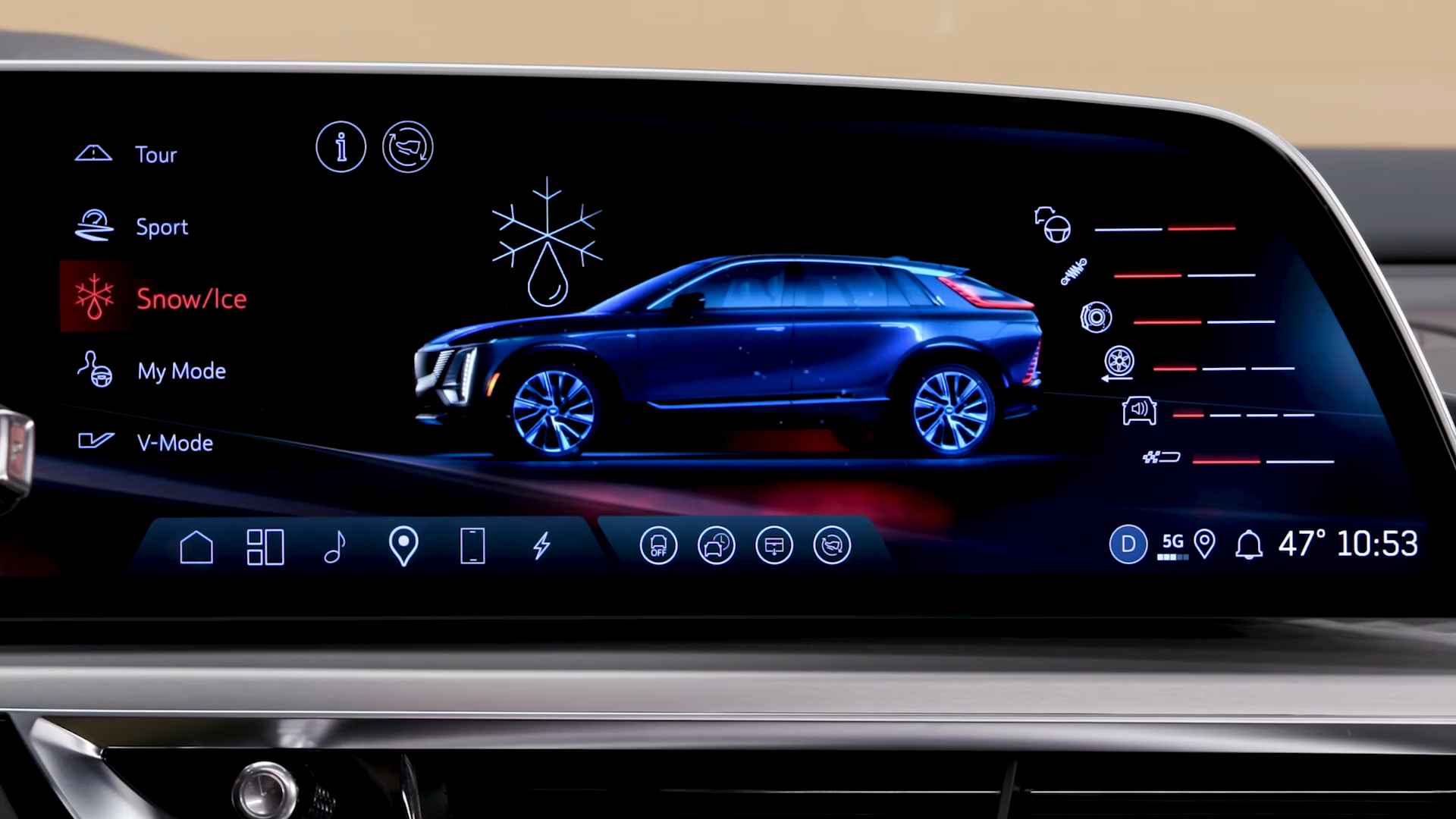
Snow or Ice Mode prioritizes stability and traction in low-grip environments. Torque delivery becomes more gradual to reduce wheel slip. Stability and traction systems intervene earlier to maintain control.
Efficiency in this mode may be slightly lower than Tour Mode, though range impact usually remains modest. Consumption changes mainly result from traction control activity rather than increased power demand.
- Snow-covered roads
- Icy surfaces
- Wet pavement with reduced grip
Cadillac Lyriq in Snow or Ice Mode focuses on predictable handling and controlled acceleration rather than maximum efficiency.
My Mode, customizable profile
My Mode allows personalization of throttle sensitivity, steering weight, and regenerative braking intensity. Drivers can configure Cadillac Lyriq to match preferred comfort and responsiveness levels.
Energy consumption in My Mode depends entirely on selected settings. Aggressive throttle combined with lighter regeneration increases usage and reduces range. A conservative throttle paired with stronger regeneration preserves efficiency close to Tour Mode results.
Flexibility in My Mode gives drivers control over how the Cadillac Lyriq behaves in everyday use, while battery capacity and core hardware remain unchanged.
How Driving Modes Affect Range and Battery Usage
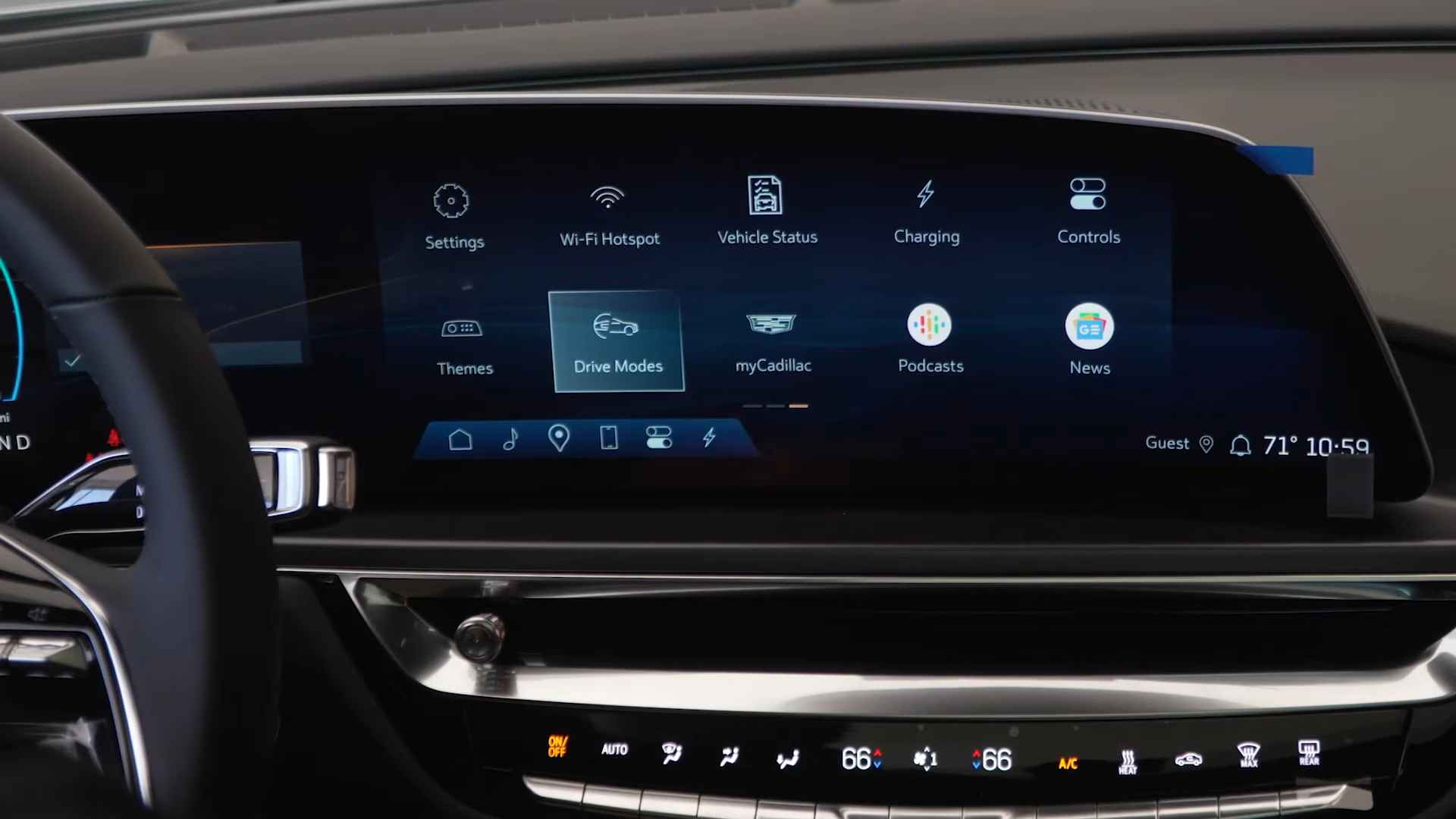
Driving modes in the Cadillac Lyriq influence energy consumption patterns without altering stored energy capacity. Software calibration determines how rapidly energy leaves the battery and how much returns during deceleration.
Indirect impact on range
Battery size, chemistry, and total usable kilowatt hours remain constant in every mode. No setting increases or decreases actual energy storage.
Software adjustments change how that energy is consumed.
- Frequent rapid acceleration
- High torque demand at low speeds
- Reduced regenerative braking intensity
Smoother accelerator input and stronger regeneration reduce consumption and extend driving distance per charge. Cadillac Lyriq responds directly to driver behavior within each selected mode.
Range estimation and display behavior
The range estimator in the Cadillac Lyriq continuously updates based on recent driving habits and selected mode. Switching into Sport Mode often triggers an immediate drop in displayed range because the system anticipates higher future consumption.
Returning to Tour Mode and maintaining gentle acceleration can raise projected range as calculations adjust to lower energy use. The displayed number represents a dynamic prediction rather than a fixed measurement tied strictly to battery percentage.
When to Use Each Mode
View this post on Instagram
Cadillac Lyriq offers flexibility for different driving conditions and priorities.
- Tour Mode works best for daily commuting, long-distance travel, and maximizing predictable range.
- Sport Mode fits drivers who prefer quicker acceleration and sharper response, accepting reduced range as part of that experience.
- Snow or Ice Mode supports safe operation on slippery roads where traction control matters more than efficiency.
My Mode allows drivers to configure the Cadillac Lyriq according to personal preference, balancing comfort, performance, and energy consumption.
Summary
Cadillac Lyriq driving modes do not change physical battery capacity. Energy storage remains constant in every setting. Software calibration determines how rapidly power is delivered and how effectively energy is recovered.
Tour Mode offers the highest real-world efficiency in typical conditions. Sport Mode prioritizes performance and reduces range by approximately 5 to 15 percent in common use. Snow or Ice Mode focuses on stability with minimal range impact. My Mode allows drivers to choose a personalized balance between efficiency and performance.