
A coolant leak often starts small enough that drivers think the car is still usable. Maybe there is a green, orange, pink, or yellow puddle under the engine bay. Maybe the reservoir keeps needing top-ups every few days.
Maybe the temperature gauge is still mostly normal. That can make the problem feel manageable. But coolant systems are pressurized, and small weak points tend to get worse, not better.
The engine produces a lot of heat every time you drive. The cooling system is there to move that heat away from the engine block, cylinder head, and other components before temperatures rise to damaging levels.
If the system cannot hold enough coolant, or if it loses pressure, it becomes much less effective at controlling heat. That is when things go from “slight leak” to “serious mechanical problem.”
The risk is not only whether coolant is leaking now, but whether the engine still has enough coolant and pressure to stay cool during the entire trip. That is why even a car that seems fine for ten minutes can overheat later in traffic, on the highway, uphill, or while idling.
When It Is And Is Not Safe
Situation
Is It Safe To Drive?
Risk Level
Tiny seep, coolant level stable, engine temp normal
Maybe for a very short emergency trip only
Moderate
Leak is visible, and the coolant level is dropping
Not really
High
Engine temperature is above normal
No
Very high
Steam from the hood or a strong coolant smell
No
Very high
Warning light for coolant or overheating
No
Very high
The puddle under the car is growing fast
No
Very high
Hose split or radiator visibly spraying/leaking
No
Extreme
What Can Actually Happen If You Keep Driving
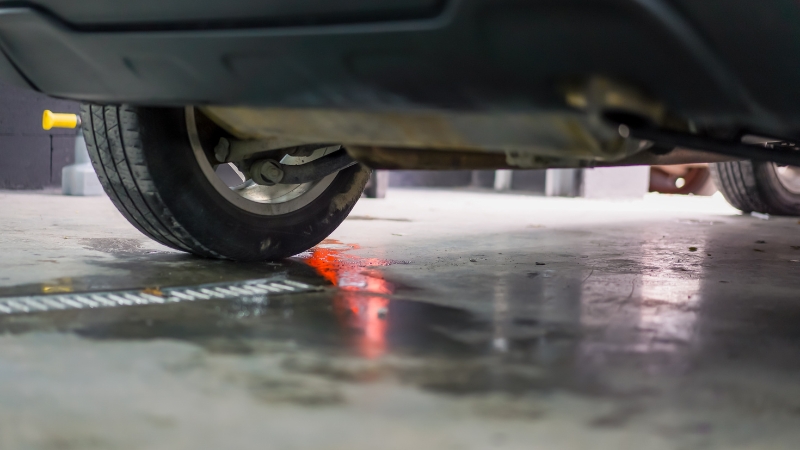
This is where many drivers underestimate the problem. They think a coolant leak is just a fluid issue. In reality, it can become an engine damage issue.
If the coolant drops too low, the engine can overheat. Once that happens, several expensive failures become possible:
The cost difference between fixing a hose leak and replacing a head gasket can be huge. That is why it usually makes no sense to “push through” and hope the car makes it for a few more days.
Common Signs You Have A Coolant Leak
Not every leak starts with steam pouring out from under the hood. Sometimes the clues are subtle at first.
The most common signs include a sweet smell around the front of the car, visible puddles under the engine bay, a coolant warning light, the temperature gauge climbing higher than usual, or the need to keep adding coolant to the reservoir.
In some cars, the cabin heater also starts blowing cooler air because the system no longer has enough coolant flow.
These are the signs readers should actually watch for:
What The Different Symptoms Usually Mean
Symptom
What It Often Suggests
How Urgent It Is
Small puddle after parking
Slow leak from hose, radiator, clamp, or reservoir
Urgent but not always immediate shutdown
Sweet smell only
Early leak or seep
Should be checked soon
Temperature gauge rising
The cooling system is losing effectiveness
Serious
Steam from the hood
Coolant is hitting hot surfaces, or the engine is overheating
Immediate stop
The heater blows cold air
Coolant may be too low, or air may be in the system
Serious
Coolant warning light
The system level is low or abnormal
Serious
Rapid fluid loss
Pressurized leak, hose failure, radiator crack, pump issue
Immediate stop
Can You Drive A Short Distance?
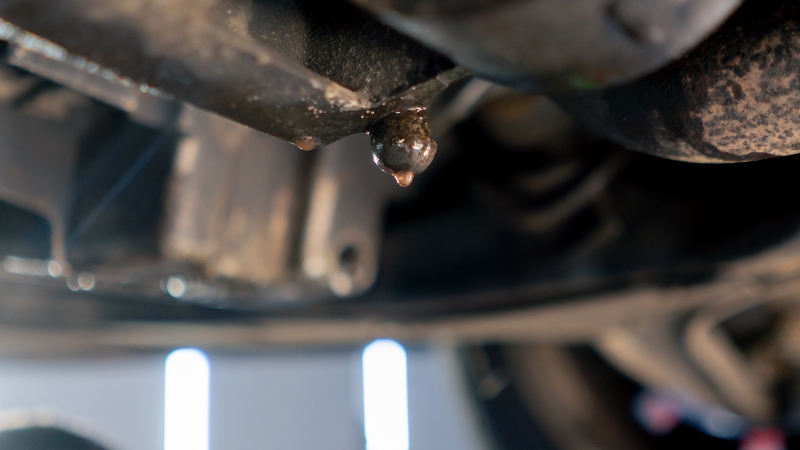
A very short drive may be possible only if all of the following are true: the engine is not overheating, the coolant level is still adequate, the leak appears slow, there is no steam, and you are only trying to reach a nearby repair shop or safe place. Even then, it is a risky decision, not a good plan.
That matters because some people hear “you can sometimes drive a little” and treat it like general permission. It is not.
A coolant leak is unpredictable once the system is compromised. What looks like a small loss in the driveway can become a major leak once the engine warms up and pressure rises.
A short emergency drive is one thing. Normal commuting, highway use, or long-distance travel with a coolant leak is not smart.
When You Should Stop Driving Immediately
There are situations where the answer is not “maybe” but clearly “stop.”
Stop the car as soon as it is safe if:
These are not signs to monitor for another day. There are signs that the cooling system may already be losing control of engine temperature.
Why Overheating Happens So Fast
View this post on Instagram
Many drivers assume the temperature gauge will give them a lot of time. Sometimes it does. Sometimes it does not.
Once the coolant gets low enough, heat transfer drops sharply. The engine keeps generating heat, but the cooling system cannot move it away efficiently.
In traffic or warm weather, the situation gets worse even faster. If the leak affects system pressure, coolant can also boil more easily, which makes temperature control even less stable.
That is why an engine can go from “slightly warm” to “dangerously hot” faster than people expect. The smaller the coolant reserve left in the system, the less margin you have.
Most Common Causes Of Coolant Leaks
The source of the leak changes the seriousness somewhat, but not the need to take it seriously. Coolant can leak from several places, and some are cheap fixes while others are more involved.
Leak Source
What Usually Happens
Typical Repair Severity
Radiator hose
Cracks, splits, loose clamp, aging rubber
Often moderate
Radiator
Crack, corrosion, seam failure
Moderate to high
Water pump
Seal failure or bearing wear
High
Coolant reservoir
Crack or cap issue
Low to moderate
Thermostat housing
Gasket failure or cracked housing
Moderate
Heater core
Coolant leaks inside the cabin or foggy windows
High
Head gasket
Internal or external coolant loss
Very high
Hose clamp or fitting
Seep or drip under pressure
Low to moderate
If You Have To Move The Car, Do This First
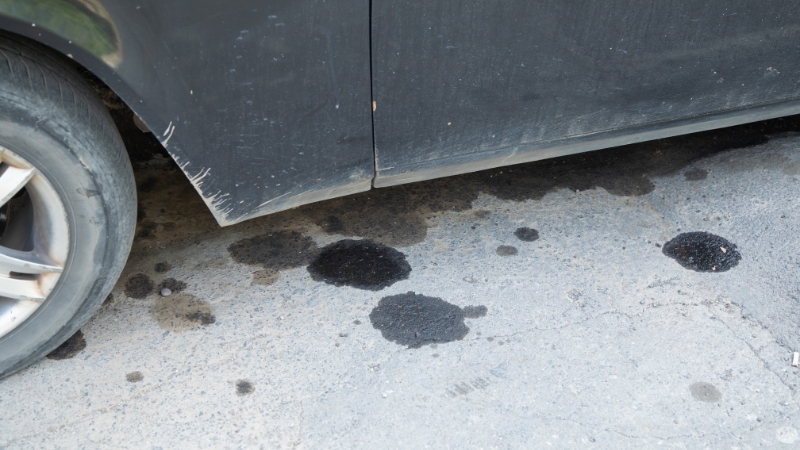
There are moments when the car has to be moved, even if only to get it off the road or into a nearby shop lot. In that case, the goal is damage control, not pretending the problem is solved.
Before moving it:
- Let the engine cool completely.
- Never open the radiator cap while the engine is hot.
- Check the coolant reservoir level.
- Look for obvious hose failures or major dripping.
- Add the correct coolant if the level is low and you have the right type.
- Watch the temperature gauge constantly.
- Drive only the minimum distance necessary.
That still does not make it safe in the normal sense. It only reduces the chance of immediate overheating.
A lot of people think that if they keep adding coolant, they can safely keep driving for days or weeks. Sometimes that seems to work for a while, but it is a risky habit. Adding coolant does not fix the leak. It only buys time, and sometimes not much of it.
There are three problems with relying on top-ups:
Top-ups are for getting out of a bad situation, not for avoiding repair.
What Not To Do
These mistakes are common and often make things worse:
- Do not keep driving just because the car still starts and moves
- Do not ignore a rising temperature gauge
- Do not open the radiator cap on a hot engine
- Do not assume water alone is a proper long-term replacement for coolant
- Do not pour in random sealers and expect a real repair
- Do not trust that a small puddle means a small risk
Emergency Decision Guide
What You See
What You Should Do
Small coolant loss, engine temp normal, shop is very close
Drive only if necessary and monitor closely
Coolant is low, and the source is unknown
Do not keep driving farther than needed
Temp gauge above normal
Stop and let the engine cool
Steam or visible overheating
Shut the engine off immediately
Coolant pouring out
Do not drive
Repeated overheating history
Tow it instead of risking engine damage
Is It Ever “Just A Minor Leak”?
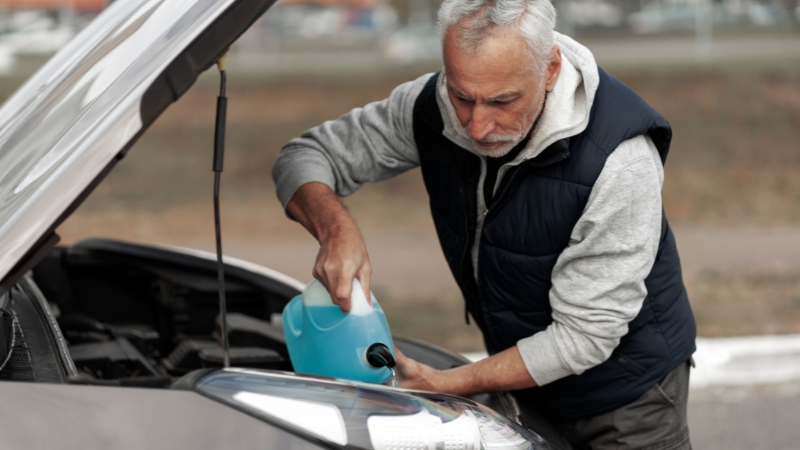
Sometimes yes, but that description can be misleading. A minor leak means the leak itself is currently small. It does not mean the consequences are minor if you keep driving without fixing it.
A tiny seep from a hose clamp may be relatively simple to repair. A cracked reservoir may also start small. But the reason mechanics still treat coolant leaks seriously is that the cooling system does not have much tolerance for neglect.
Losing enough coolant even once can be enough to cause overheating, and one overheating event can create damage that costs far more than the original repair would have.
The Best Practical Advice
If you suspect a coolant leak, think in terms of engine protection, not convenience. Confirm the coolant level only when the engine is cool. Look for puddles, smell, and visible drips. Watch the temperature gauge.
If the car is running hot, steaming, or losing coolant quickly, stop driving and have it towed. If the leak seems small and the engine is staying fully normal, a very short trip to a repair shop may be possible, but it is still not something to delay.
That is the real answer people need. A coolant leak is one of those problems that can be cheap when handled early and very expensive when ignored.
Final Thoughts
@accurateautoinc Can You Drive With A Leaking Radiator? 🚗 #mechanic #automotive #repairshop #carrepair #cartok #mechanicsoftiktok ♬ original sound – AccurateAuto
So, is it safe to drive with a coolant leak? In most cases, no. At best, it may be barely acceptable for a very short emergency drive when the engine is cool, the leak is small, and the temperature stays normal.
But that is not the same as saying it is safe in general. The moment coolant loss starts affecting engine temperature, the risk becomes serious.
The reason to take it seriously is simple. Coolant leaks do not just waste fluid. They threaten the engine itself.
A hose, radiator, reservoir, or water pump problem is usually far cheaper to fix than the damage caused by overheating. That is why the smartest move is always to treat the leak early, before it turns into a much bigger repair.