
Proper refrigerant charge is critical for effective car air conditioning performance. Too little refrigerant reduces cooling capacity and can starve internal components of lubrication. Too much refrigerant creates excessive pressure inside the system, disrupting operation and increasing the risk of component damage.
An AC pressure switch plays a key safety role in automotive air conditioning systems. It monitors refrigerant pressure and protects the compressor by cycling it on and off when pressure moves outside safe operating limits. High-pressure and low-pressure switches work together to keep the system operating within manufacturer specifications.
Overcharging the system and experiencing pressure switch failure can create overlapping symptoms. Warm air, unusual compressor behavior, and inconsistent cooling may appear in both cases.
Accurate diagnosis requires pressure testing and electrical inspection to determine the actual cause.
Let’s see what the main symptoms are.
Common Symptoms of an Overcharged AC
Overcharging an automotive AC system disrupts pressure balance and heat transfer. Refrigerant must circulate in a precise amount to allow proper compression, condensation, expansion, and evaporation. Excess refrigerant interferes with that cycle and creates noticeable performance issues.
Reduced Cooling Efficiency or Warm Air

Reduced cooling is often the first noticeable symptom of an overcharged AC system. Air coming out of the vents may feel less cold than normal, even when temperature settings are correct.
Cooling may begin at an acceptable temperature and then gradually become warmer as internal pressure increases during operation.
- Vent temperature fails to reach normal cold levels, especially during idle conditions
- Cooling performance drops after several minutes of operation
- Cabin temperature fluctuates instead of remaining steady
Excess refrigerant prevents proper heat exchange inside the condenser and evaporator. Condenser coils struggle to release heat efficiently because pressure remains too high. Evaporator performance also declines, limiting the system’s ability to absorb heat inside the cabin.
Instead of improving cooling output, adding refrigerant reduces efficiency and disrupts the compression and expansion cycle.
Elevated System Pressures
Pressure imbalance is one of the clearest technical indicators of overcharge. Manifold gauge readings often reveal abnormally high pressure on the high side. Low side readings may also exceed manufacturer recommendations, especially after the system reaches operating temperature.
Consistently elevated readings confirm excessive refrigerant volume. Pressure that remains high even after airflow improves across the condenser strongly suggests overcharge rather than temporary environmental influence.
Unusual Noises
Abnormal sounds often develop when refrigerant volume exceeds safe limits. Compressor components are engineered to compress refrigerant vapor, not liquid. Excess refrigerant increases the chance that liquid enters the compressor.
Liquid refrigerant inside the compressor creates internal stress and irregular mechanical movement. Continued operation under these conditions increases the risk of internal damage.
Compressor and Component Stress
Elevated pressure forces the compressor to operate under a heavier load. Increased resistance raises operating temperature and accelerates wear on internal bearings, seals, and pistons.
- Premature compressor clutch wear
- Seal deterioration leading to refrigerant leaks
- Hose expansion or weakness due to constant high pressure
Condenser efficiency also declines when pressure remains too high, which further increases strain on the entire system. Mechanical stress compounds over time and may result in complete compressor failure if not corrected.
AC Pressure Switch Function and Failure
Pressure regulation protects the AC system against both excessively high and dangerously low refrigerant levels. AC pressure switches monitor pressure on high and low sides and interrupt compressor operation when readings fall outside safe limits.
High-pressure switches shut down compressor operation if pressure rises to a potentially damaging level. Low-pressure switches prevent compressor engagement if refrigerant levels drop too low to maintain lubrication.
Protection works through controlled clutch disengagement. Compressor operation stops when pressure exceeds or drops below safe thresholds, then resumes once pressure returns to the normal range.
Failure of a pressure switch can create symptoms that resemble a refrigerant imbalance. A malfunctioning switch may misinterpret normal pressure as unsafe or fail to respond to actual pressure spikes. Incorrect cycling then produces cooling problems that appear similar to overcharging.
Symptoms of a Blown or Failing AC Pressure Switch
Electrical faults in pressure switches interfere with accurate pressure monitoring. Because compressor operation depends on correct sensor feedback, even minor switch issues can disrupt cooling performance.
Intermittent AC Operation
Unpredictable compressor cycling is a common sign of switch malfunction. Cooling may function normally for short periods and then suddenly shut off without temperature or load changes.
- Compressor engaging and disengaging within seconds
- Cooling that works briefly after startup and then stops
- An operation that resumes after bumps or vibration
Inconsistent engagement often mimics refrigerant problems, yet pressure readings may remain within normal range.
AC Stops Working or Will Not Engage
Complete compressor inactivity can occur if the pressure switch fails electrically. The compressor clutch may never engage, resulting in no cold air output.
- Audible click absent when AC is turned on
- No change in engine load when AC button is pressed
- Normal blower airflow but no cooling
The system may contain proper refrigerant volume, yet a faulty switch prevents the compressor clutch circuit from closing.
Warm Air Instead of Cold
Warm air blowing through vents often results when the compressor remains disengaged due to incorrect pressure readings. Airflow feels normal because the blower motor continues operating, but refrigerant circulation does not occur.
Cabin temperature remains elevated even though the refrigerant level is correct. Electrical interruption at the pressure switch is often responsible.
Strange AC System Noises
Clicking noises can develop when a failing switch repeatedly triggers compressor engagement and disengagement. Rapid clutch cycling produces noticeable sounds under the hood.
Noise pattern differs slightly compared to overcharge, as pressure readings may not show persistent elevation.
Pressure Switch Location and Dual Role
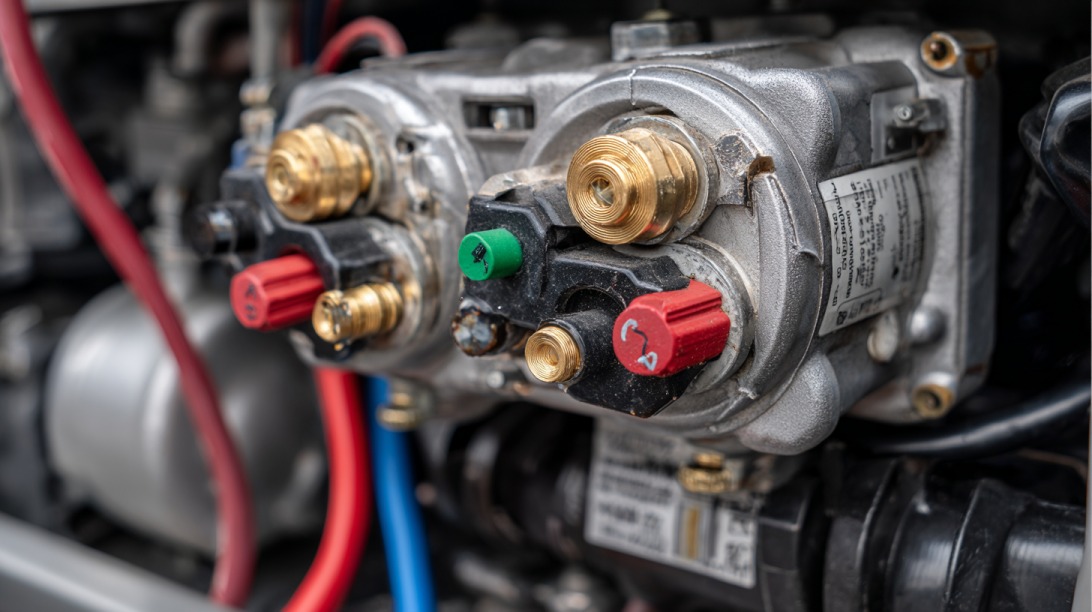
High-side switches are typically installed along the high-pressure line after the compressor. Low side switches are positioned on the suction line before refrigerant enters the compressor.
- High-side switch protects against excessive pressure buildup
- Low side switch protects against insufficient refrigerant and lubrication loss
- Failure in either component can interrupt compressor function and disrupt cooling performance.
How to Distinguish Between Overcharge and Pressure Switch Failure
Similar symptoms often complicate diagnosis. Warm air, compressor cycling, and unusual noises can appear in both conditions. Accurate testing separates mechanical refrigerant imbalance from electrical sensor malfunction.
Overcharge Indicators
Gauge readings provide the most reliable confirmation of excessive refrigerant. High side pressure exceeding manufacturer limits remains the strongest warning sign.
Cooling performance typically declines as pressure rises. Persistent pressure elevation strongly supports an overcharge diagnosis.
Pressure Switch Failure Indicators
View this post on Instagram
Electrical irregularities suggest a switch malfunction instead of a refrigerant imbalance. The compressor may cycle incorrectly even though gauge readings appear normal.
OBD II scans often reveal stored diagnostic trouble codes related to AC pressure sensors.
-
- High-pressure circuit faults
- Low pressure circuit interruptions
- Sensor signal inconsistencies
Absence of abnormal pressure readings combined with electrical fault codes points toward switch failure.
Testing Approach
Accurate diagnosis requires mechanical and electrical evaluation. Manifold gauges should be connected to both service ports to measure operating pressure under controlled conditions. Readings must be compared with manufacturer specifications at specific ambient temperatures.
Electrical inspection is equally important. Connectors should be checked for corrosion, loose terminals, or damaged wiring. OBD II scanning helps identify stored AC-related codes.
Multimeter testing can confirm switch continuity. Open circuits, inconsistent readings, or failure to close under proper pressure conditions indicate pressure switch malfunction rather than refrigerant overcharge.
Summary
Overcharged AC systems typically show elevated pressure readings, reduced cooling efficiency, and increased compressor stress. Continued operation under excessive pressure can damage major components.
Failing pressure switches cause irregular compressor behavior, intermittent cooling, or complete loss of engagement despite proper refrigerant levels.
Accurate diagnosis requires pressure measurement, electrical inspection, and fault code scanning. Proper testing distinguishes refrigerant overcharge from a blown pressure switch and prevents unnecessary repairs.
Ever had a problem with an overcharged battery? Know the signs before it happens
@wrenchboss_njWhat happens if your car battery is overcharging?♬ original sound – wrenchboss_nj