
The Nissan Altima has long used a continuously variable transmission (CVT) instead of a traditional stepped‑gear automatic. CVTs use belts and pulleys to provide an infinite range of gear ratios and are designed to improve fuel economy and keep the engine in its most efficient power band.
Nissan was one of the first mainstream manufacturers to adopt the technology in the early 1990s. In theory, the CVT should deliver smooth, responsive acceleration with fewer moving parts than a conventional automatic.
In practice, however, the Altima’s CVT has been plagued by reliability problems across multiple model years. Owners have reported lurching, shaking, delayed acceleration, overheating, and even complete transmission failure.
These complaints have led to multiple recalls, extended warranties, and class‑action lawsuits, yet some issues persist. This article explains how the Altima’s CVT works, summarizes the main causes of failure, reviews major complaints by model year, and offers practical advice for owners.
How the Nissan CVT Works
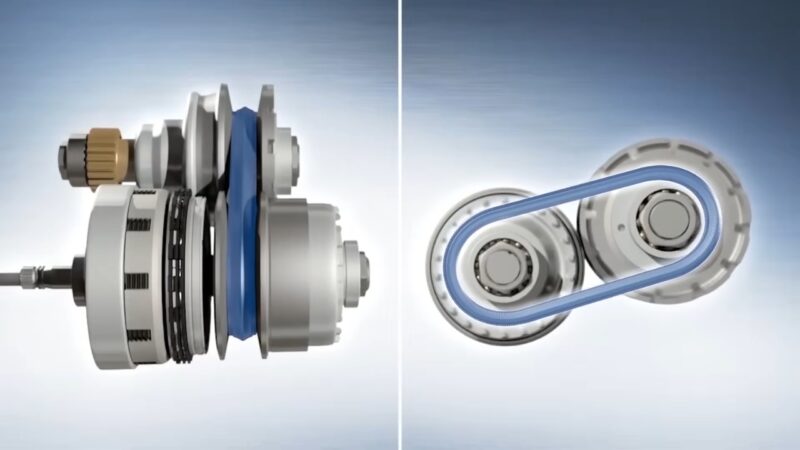
Unlike a conventional automatic transmission that relies on fixed gear sets, the Nissan CVT uses a segmented steel belt wrapped around two variable‑diameter pulleys.
By moving the pulleys closer together or farther apart, the CVT continuously varies its reduction ratio, and a transmission control module (TCM) manages belt position based on throttle input.
Nissan promoted several advantages over traditional automatics:
Despite these theoretical benefits, the Altima’s CVT has suffered from design flaws and quality issues that undermine reliability.
Why Altima CVTs Fail
Owners and technicians describe several recurring causes of CVT failure in the Altima:
Cause
Explanation
Overheating
Long drives and hot climates can cause excessive heat build‑up in the CVT. Excessive heat degrades lubricant and can cause the metal belt to slip or wear prematurely.
Fluid issues
Insufficient or contaminated CVT fluid leads to jerking, shuddering, and delayed acceleration. Nissan specifies genuine NS‑3 CVT fluid, and failing to change it regularly (30–60 k miles) accelerates wear.
Software/TCM problems
The Altima’s transmission relies on software to control pulley ratios. Faulty or outdated programming can cause erratic revving, hesitation,n or rough shifting.
Wear and tear on belts and pulleys
The CVT’s steel belt and pulley system can wear out prematurely. Unlike conventional transmissions, minor wear leads to slippage and loss of power rather than noisy but functional operation.
Manufacturing defects
Some model years have defective components or poor assembly quality. These defects have been cited in owner complaints and lawsuits.
Major Recalls and Warranty Extensions
Nissan has acknowledged serious CVT problems for certain models and issued recalls or extended warranties:
- 2013–2016 Altima recall: In 2016, Nissan recalled 2013–2016 Altima sedans to address a defect that could cause CVT failure and power loss.
- Extended warranty (2007–2010 models): As lawsuits accumulated, Nissan extended the powertrain warranty for 2007–2010 Altima models to 10 years or 120 000 miles.
- Sentra, Pathfinder, and Murano recalls: Nissan also recalled 2012–2017 Sentra, 2013–2014 Pathfinder, and 2015 Murano models for similar CVT defects.
- 2019–2020 Altima class‑action (no recall): For the 2019‑2020 Altima, owners filed a class‑action lawsuit alleging the CVT causes shaking, jerking, lurching, and stalling. Plaintiffs claim Nissan knew about the design or manufacturing defects but refused to recall the vehicles.
Model‑Year Problems and Complaints
View this post on Instagram
2017–2018 Altima (Settled Lawsuit)
A class‑action lawsuit for 2013–2016 models was settled, and another covering 2017–2018 models resulted in compensation. Owner complaints logged with the National Highway Traffic Safety Administration (NHTSA) reveal recurring symptoms:
- Shaking and shuddering: Drivers of 2017 Altimas report the CVT “shimmying” and shaking the entire car, slowing to under 10 mph before failing.
- Power issues and delayed acceleration: Many 2017 Altima owners describe a delay when accelerating from a stop; the engine revs to 3 500–4 000 rpm, yet the car struggles to reach 20 mph. These delays can nearly cause collisions.
- Jerking during gear changes: Drivers complain that the CVT jerks, stalls, shudders, or hesitates when shifting, making them feel unsafe.
- 2018 Altima CVT failures: Some 2018 models experienced complete CVT failure. One owner’s vehicle failed at 73 694 miles, and the dealer diagnosed fault code P17F0 but provided only partial goodwill coverage because the warranty had expired.
2019–2020 Altima (Unresolved Lawsuit)
The 2019 model year introduced Nissan’s redesigned Altima, but the CVT problems persisted.
CarComplaints reports that a class‑action lawsuit filed in October 2022 alleges the transmissions cause jerking, lurching, juddering, and stalling. Owners say the engine revs without corresponding acceleration, creating an “extreme and unreasonable safety hazard”.
Plaintiffs claim Nissan issued multiple technical service bulletins, yet offered no effective repair and refused to recall or replace the defective transmissions. The suit includes 2019–2020 Altimas and remains unresolved.
2021–2024 Altima
Nissan has continued to sell the Altima with a CVT, and complaints persist. The LemonLawHelp consumer database notes that 2019–2024 Altima owners report stalling, loss of acceleration,n and CVT messages on the dashboard. Some 2019 owners say the transmission malfunctioned, causing the car to stall at traffic lights or lose power in traffic.
2019 Altima Highlight in Reliability Rankings
Endurance Warranty’s 2025 analysis of unreliable vehicles names the 2019 Altima among the decade’s most problematic cars because of CVT issues.
The article notes that a class‑action lawsuit was filed in 2022 alleging defective CVTs cause the 2019 Altima to shake, jerk, and stall; it also reminds readers that earlier CVT problems led to recalls of 2013–2016 models, but that 2019 cars were not recalled, leaving owners to pay for repairs.
Model years
Key issues & symptoms
Nissan response/recall status
2007–2010
Early Altima CVTs exhibited overheating and belt wear, leading to jerking and failure.
Nissan extended the powertrain warranty to 10 years/120 000 miles for these models.
2013–2016
Lurching, acceleration lag, and stalling due to defective CVT; owners reported safety hazards.
Nissan recalled 2013–2016 Altimas to fix the defect causing transmission failure and power loss; class‑action lawsuits were settled.
2017–2018
Jerking, shuddering, and delayed acceleration; some 2018 cars experienced complete CVT failure.
Lawsuit settled; owners received compensation. No nationwide recall.
2019–2020
Class‑action suit alleges shaking, lurching, juddering, and stalling; engines rev without corresponding acceleration.
No recall; lawsuit filed in 2022 remains unresolved; technical service bulletins issued, but no permanent fix.
2021–2024
Continuing reports of stalling and loss of acceleration, with dashboard CVT warnings.
No official recall; owners encouraged to check warranty status and TSBs.
Practical Advice for Owners
- Check for recalls and extended warranties. If your Altima falls within the 2013–2016 recall or the 2007–2010 warranty extension, contact a Nissan dealership to schedule a free repair. Also monitor NHTSA and Nissan websites for new recalls covering newer model years.
- Maintain the CVT fluid. Change the CVT fluid every 30 000–60 000 miles or as specified in the owner’s manual, using only genuine NS‑3 fluid. Regular fluid changes help prevent overheating and clutch wear.
- Update the TCM software. Visit the dealership to ensure your transmission control module has the latest programming. Software updates can correct some hesitation and revving issues.
- Monitor symptoms early. If you experience jerking, shuddering, delayed acceleration, or warning lights, have the vehicle inspected immediately. Document all repairs and communications with Nissan; this information may be helpful if future lawsuits or recalls apply to your model year.
- Consider extended coverage. Because CVT repairs can cost US$3 500–US$8 000, some owners purchase extended warranties or third‑party service contracts. Evaluate coverage options carefully, ensuring they include CVT replacement and do not exclude known defects.
Conclusion
@pistonlore Why CVTs Are So Bad (Nissan Altima Example). #mechanic #cartok #RickAndMorty #cvt #cvttransmission #transmission #nissan #nissanaltima ♬ original sound – Piston Lore
Nissan’s adoption of the CVT for the Altima promised smoother performance and better fuel economy, but repeated mechanical, software, and design defects have eroded consumer confidence.
Overheating, fluid degradation, faulty TCM programming, premature belt wear, and manufacturing flaws all contribute to the Altima’s transmission woes. The problems have spurred multiple recalls, extended warranties, and class‑action lawsuits, yet remain unresolved for some recent model years.
Owners should stay vigilant, maintain their vehicles carefully, and watch for recall notices. Until Nissan implements a comprehensive fix, potential buyers should consider the Altima’s CVT reliability record when comparing midsize sedans.