
An engine misfire happens when one cylinder does not burn its air-fuel charge properly during the combustion cycle.
California emissions regulations define misfire broadly as a lack of combustion in a cylinder caused by missing spark, poor fuel metering, poor compression, or another related fault.
In plain language, one of the engine’s basic needs, spark, fuel, air balance, timing, or compression, falls out of line badly enough that combustion becomes weak, erratic, or absent in a cylinder.
In a modern gasoline engine, every cylinder is expected to contribute a near-even power pulse. When one drops out, even for brief moments, the engine no longer feels smooth. That unevenness is why drivers often describe a misfire as bucking, stumbling, jerking, shaking, sputtering, or hesitation under load.
SAE literature on misfire detection ties the condition to changes in crankshaft speed, which is one reason modern control modules can often identify a misfire quickly and log a trouble code.
Common Engine Misfire Symptoms
Misfires do not always feel dramatic. Some arrive only under load, some appear during a cold start, and some show up only at idle. Still, a few patterns come up again and again.

Rough Idle
One of the most common signs is a shaky or lumpy idle. At a stoplight, the steering wheel, seat, or dashboard may vibrate more than usual.
Cars.com notes that a misfire often produces a rough idle, and many drivers notice it first when the car is sitting still with the engine running.
Hesitation Or Jerking During Acceleration
Press the gas, and the car may stumble before it picks up speed. In other cases, it surges unevenly, almost as if power is coming in waves.
AAA material on spark plugs describes bad plugs as a cause of hesitation or sudden jerking under throttle, and misfire guidance from consumer auto sources points to stutter during acceleration as a classic symptom.
Loss Of Power
A cylinder that fails to contribute properly reduces overall engine output. On a 4-cylinder engine, losing one cylinder’s contribution can feel especially obvious.
Hills become harder work, passing takes longer, and the car may feel unusually flat even with the throttle open. Driver-education and repair guidance regularly lists power loss as a common drivability complaint tied to misfire.
Check Engine Light, Sometimes Flashing
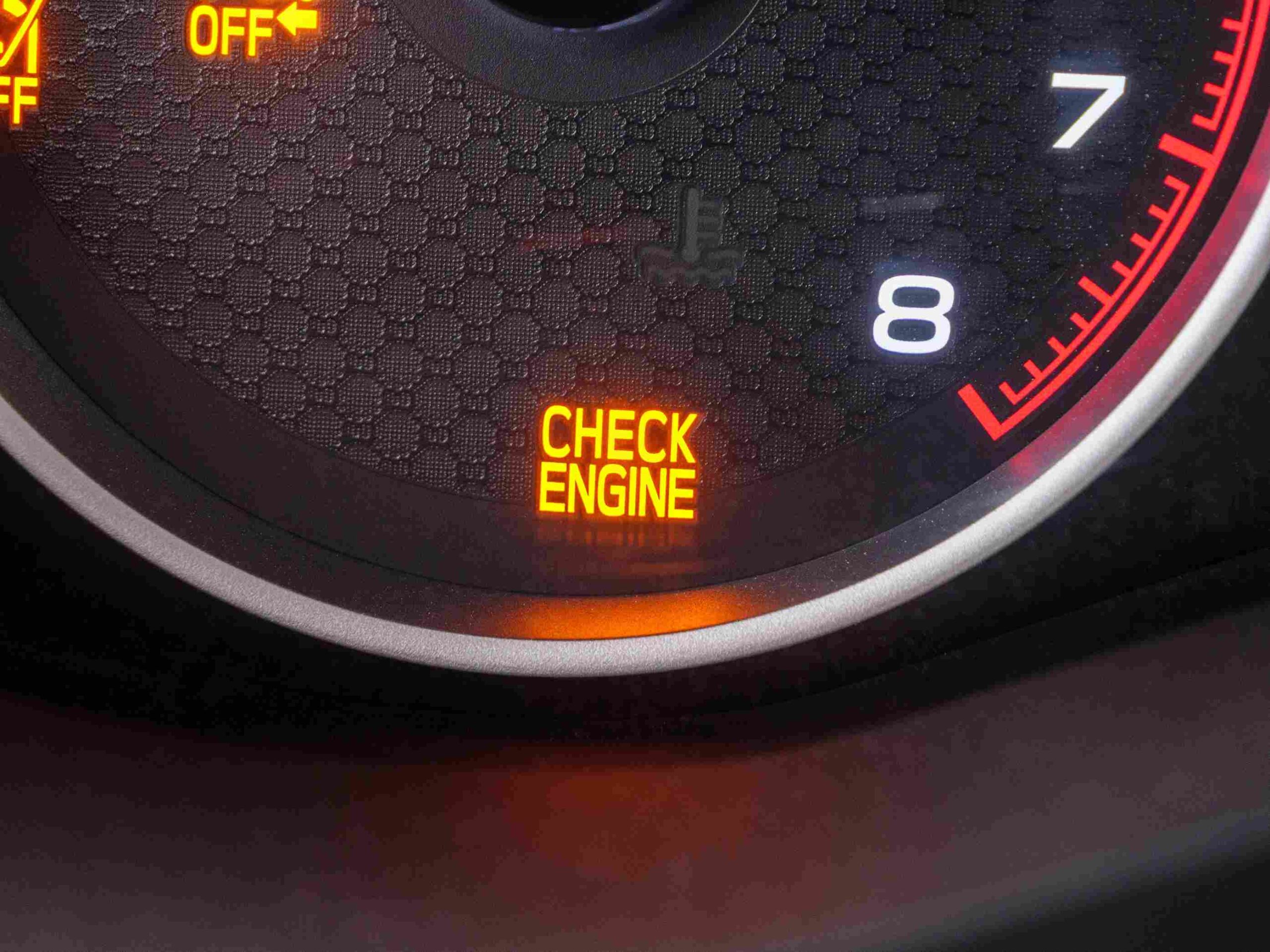
A steady check engine light often means the fault has been detected and stored. A flashing check engine light raises the urgency.
AAA says a flashing light usually requires immediate attention, and Consumer Reports explains that on late-model vehicles a blinking light often indicates a severe engine misfire dumping unburned fuel into the exhaust.
Hard Starting
Some misfires happen only after the engine starts, but ignition or fuel problems can also make starting harder in the first place.
A weak spark, poor fuel delivery, or a badly imbalanced mixture may cause extended cranking, rough startup, or an engine that catches and nearly stalls.
Automotive training material commonly groups hard starting and misfire under the same family of drivability complaints because the root causes often overlap.
Poor Fuel Economy
A misfiring engine is burning fuel inefficiently. If you find yourself filling up earlier than normal without a change in driving habits, a persistent misfire belongs on the suspect list. AAA guidance on bad spark plugs points to poorer fuel mileage as a common side effect.
Popping Or Backfiring Sounds
When combustion timing goes wrong or fuel leaves the cylinder only partly burned, you may hear popping through the exhaust or, less often, through the intake.
Sound alone does not confirm a misfire, but in combination with rough running, it is a strong clue that combustion is happening at the wrong moment or not finishing cleanly.
A Quick Look At Symptoms And Likely Causes
| Symptom | What It Often Feels Like | Common Root Causes |
| Rough idle | Shaking at a stop, uneven engine note | Worn spark plugs, weak coil, vacuum leak, injector problem |
| Hesitation under throttle | Stumble or jerk when accelerating | Ignition fault, lean fuel delivery, moisture intrusion, sensor issue |
| Flashing check engine light | Warning light blinks during rough running | Severe active misfire with catalyst risk |
| Hard starting | Long crank, rough startup | Weak spark, poor fuel pressure, fouled plugs |
| Loss of power | Sluggish climbing or passing | Cylinder-specific misfire, compression loss, fuel issue |
| Poor fuel economy | More frequent fill-ups | Incomplete combustion, rich or unstable mixture |
Broad cause categories in emissions regulations and service literature include spark problems, fuel-metering faults, compression loss, and other control-system issues.
Real-world service bulletins filed with NHTSA add examples such as cracked spark plugs, moisture buildup in charge-air systems, and damaged wiring.
What Usually Causes An Engine Misfire

Engine misfires usually come down to a handful of core problems, and once you know where combustion tends to break down, the symptoms start making a lot more sense.
Worn Or Fouled Spark Plugs
Spark plugs are still one of the most common culprits. As plugs wear, the electrode gap changes, and the spark can become weak or inconsistent. Oil fouling, carbon deposits, incorrect gap, or physical damage can make matters worse.
AAA notes that bad spark plugs can lead to misfiring, hesitation, jerking, and worse fuel mileage. A Stellantis service bulletin carried by NHTSA even lists a cracked spark plug during installation as a direct cause of P0300 through P0304 misfire codes in some vehicles.
A familiar real-world pattern goes like this: the car idles a little rough for a few weeks, then starts stumbling under moderate acceleration, especially on damp mornings or while merging onto a highway. In plenty of cases, worn plugs sit at the center of that chain.
Failing Ignition Coils
Many modern engines use coil-on-plug ignition. When one coil weakens or fails, the cylinder attached to it may misfire under load before it fails outright.
The symptom may come and go at first, which can mislead drivers into thinking the issue has disappeared. Consumer repair guidance from The AA and other reputable auto sources regularly lists ignition-coil failure alongside spark plugs as one of the most common misfire causes.
Coil faults often become more obvious when the engine is asked to work harder. A car that feels fine cruising lightly at city speed may stumble during a fast on-ramp pull.
Fuel Injector Problems
A clogged, leaking, or electrically faulty injector can throw off fuel delivery in one cylinder. Too little fuel may create a lean misfire.
Too much fuel can foul a plug or wash down cylinder walls over time. Administrative and service records tied to diagnostics have described injector faults causing cylinder-specific misfires and storing codes such as P0307.
Injector-related misfires can be tricky because the engine may act differently at idle than at higher rpm. Some misfire more on cold start. Others show up under steady cruise.
Low Fuel Pressure Or Fuel Supply Problems
An engine needs the right amount of fuel at the right pressure. A failing pump, restricted filter on vehicles that still use a serviceable one, contaminated fuel, or pressure-control issues can starve multiple cylinders and create random or multiple-cylinder misfire behavior.
AAA guidance on bad fuel notes that sputtering and misfiring can follow fuel-related problems, especially when combustion quality drops.
When a misfire affects several cylinders instead of one, fuel supply moves higher on the suspect list.

Vacuum Leaks And Lean Air-Fuel Mixture
Air entering the engine without being measured correctly can upset mixture enough to cause rough idle and lean misfire. Intake-manifold leaks, torn vacuum hoses, PCV issues, or sealing problems around the air path can all contribute.
Technical and academic materials on engine diagnostics commonly connect vacuum leaks and lean mixtures with hesitation and misfire behavior. Manufacturer bulletins also show how intake-system fitment problems can trigger high-misfire faults with catalytic-converter risk.
Idle is often where a vacuum leak announces itself first because even a small unmetered air leak represents a bigger percentage of total airflow when the throttle is mostly closed.
Sensor Or Engine-Management Problems
Modern engines rely on a web of data from sensors such as the mass-airflow sensor, crankshaft position sensor, camshaft position sensor, oxygen sensors, and others.
Bad data can throw off fuel delivery or spark timing enough to create misfire symptoms. Misfire detection itself often depends on crankshaft-speed analysis, which is why crank and cam signals matter so much in diagnosis.
Training materials for automotive technicians include inspection and testing of crank and cam sensors among key steps for drivability problems including misfire.
A misfire tied to sensor data may show up with other clues such as erratic idle speed, hard starting, or codes related to timing correlation or air metering.
@accurateautoinc What can cause a misfire? #fyp #auto #car #engine #automotive ♬ original sound – AccurateAuto
Compression Loss
Compression is the mechanical foundation of combustion. If a cylinder has a burned valve, broken ring, head-gasket leak, or valvetrain problem, spark and fuel may both be present and the cylinder can still misfire because the mixture cannot build enough pressure to burn correctly.
ASE study material gives a clean example: when a leak-down test shows air escaping through the tailpipe, an exhaust valve that is not seating can be the cause.
Mechanical causes usually matter more because parts replacement in the ignition system will not solve them. A driver may spend money on plugs and coils only to learn the real issue was low compression all along.
Moisture Intrusion And Wiring Faults
Not every misfire comes from ordinary wear. NHTSA-hosted service bulletins show how unusual causes can create real misfire complaints in the field.
One GM bulletin describes moisture buildup in the charge-air cooler leading to P0300 misfire during heavy acceleration after humid or rainy driving.
A Ford program notice describes wire-harness chafing that can produce a runs-rough or misfire condition. Cases like those are good reminders that diagnosis should follow evidence, not guesswork.
What Trouble Codes Often Show Up
- P0300: random or multiple-cylinder misfire detected
- P0301: cylinder 1 misfire
- P0302: cylinder 2 misfire
- P0303: cylinder 3 misfire
- P0304: cylinder 4 misfire
- Higher-number variants follow the same pattern for engines with more cylinders
NHTSA-hosted service bulletins and repair guidance repeatedly use that code family when describing engine misfire complaints.
A code points you toward the affected cylinder or pattern. It does not guarantee the failed part. P0302, for example, does not automatically mean the spark plug in cylinder 2 is bad. It means cylinder 2 is where the misfire was detected.
When You Should Stop Driving
A flashing check engine light, strong shaking, obvious power loss, or popping severe enough to make the car feel unsafe should move the problem into the urgent category.
AAA and Consumer Reports both warn that a blinking light often means a serious misfire with risk to the catalytic converter. Continued driving under that condition can turn a relatively modest repair into a far more expensive one.
A mild rough idle with no flashing light gives a bit more room, but “room” does not mean “ignore it for a month.” Intermittent misfires often grow more consistent.
How A Mechanic Usually Diagnoses A Misfire
A good diagnosis usually follows a logical sequence instead of parts swapping.
| Step | Explanation |
|---|---|
| 1. Read Codes And Freeze-Frame Data | Codes show whether the misfire is random or cylinder-specific. Freeze-frame data shows engine conditions when the fault set, rpm, load, coolant temperature, and more. |
| 2. Check The Basics First | Shops often begin with plugs, coils, and simple visual checks because ignition faults are common and easy to confirm. On a coil-on-plug engine, swapping a suspect coil to another cylinder can show whether the misfire follows the part. |
| 3. Verify Fuel Delivery | Fuel-trim numbers, injector balance, and fuel pressure testing help reveal whether the engine is running lean, rich, or uneven cylinder to cylinder. |
| 4. Look For Air Leaks | Smoke testing or careful intake inspection can uncover vacuum leaks that create lean misfire, especially at idle. |
| 5. Confirm Mechanical Health | Compression and leak-down testing matter when ignition and fuel checks do not fully explain the symptom. |
Volkswagen service guidance carried by NHTSA even cautions that a P0300 random misfire code is not, by itself, a reason to replace all injectors, plugs, or coils at once. Proper diagnosis should identify the real cause before parts go on the car.
Can You Fix A Misfire Yourself?
Sometimes, yes. Sometimes, no.
A confident DIY owner may be able to replace worn spark plugs, inspect obvious air-intake issues, or scan trouble codes with a quality OBD-II reader. Beyond that, misfire diagnosis often gets technical quickly. Fuel-pressure testing, smoke testing, injector testing, oscilloscopes, compression testing, and leak-down work all demand more skill and equipment.

How To Reduce The Odds Of A Future Misfire
Prevention is not glamorous, but it works.
- Replace spark plugs at the interval recommended for your engine
- Fix small intake leaks before they turn into drivability problems
- Use the fuel grade the manufacturer specifies
- Address check engine lights early instead of waiting for a larger failure
- Keep up with scheduled maintenance on filters, ignition components, and engine management issues
- Avoid repeated hard driving when the engine already feels rough
Misfires are easier to live with for a day than to repair after months of neglect. That is usually where repair bills grow.
Final Take
Engine misfire symptoms tend to announce themselves through rough idle, hesitation, weak acceleration, poor fuel economy, or a flashing check engine light.
Common causes include worn spark plugs, failing coils, injector problems, fuel-delivery faults, vacuum leaks, sensor trouble, and compression loss. The most important move is not guessing which part failed, but treating the symptom seriously and diagnosing it before exhaust damage or a bigger engine problem follows.