
When a vibration shows up mostly at highway speed, tires and wheels are usually the first place to look. That is not guesswork.
NHTSA’s tire safety guidance says proper balancing prevents shaking or vibration as the tire rotates.
Bridgestone also explains that wheel balancing corrects uneven weight distribution in the wheel and tire assembly and reduces vibration.
Michelin says out-of-balance tires can create vibration and also contribute to uneven wear and extra suspension wear.
A few reasons explain why tire and wheel issues rise to the top:
- A small imbalance becomes more noticeable as rotational speed increases.
- Tire defects that feel mild at city speed can become obvious at 60 mph to 75 mph.
- Bent wheels, bad tires, or uneven wear often create a repeating shake pattern that lines up with road speed.
Manufacturer diagnostic bulletins filed with NHTSA repeatedly point technicians toward tire balance, runout, inflation, irregular wear, and wheel damage when a vehicle shakes more as speed rises.
Some also note that a vibration that gets worse with speed is often balance-related, while a shake concentrated at one narrower speed band can point more toward runout.
A Quick Symptom Guide
| What You Feel | Often Points To | Why |
| Steering wheel shake at highway speed | Front tire balance, front wheel damage, front suspension or brake issue | Problems at the front axle usually travel into the steering wheel |
| Seat or floor vibration | Rear tire issue, rear wheel problem, driveline issue | Rear axle and underbody vibrations are often felt through the seat or floor |
| Vibration only while braking | Brake rotor or brake-related issue | Brake pulsation and steering shake under braking are classic clues |
| Vibration during acceleration | Driveline, axle, engine, or transmission issue | Load-sensitive shake often changes with throttle input |
| Vibration after hitting a pothole | Bent wheel, alignment change, tire damage, suspension wear | Impact damage can shift several things at once |
| Vibration after new tires | Poor balance, mounting issue, road force issue, wheel not centered properly | New tire installation does not guarantee a proper final result |
The Most Common Causes
In most cases, a car that vibrates at higher speeds is reacting to a handful of repeat offenders, and each one leaves its own set of clues.
Unbalanced Tires
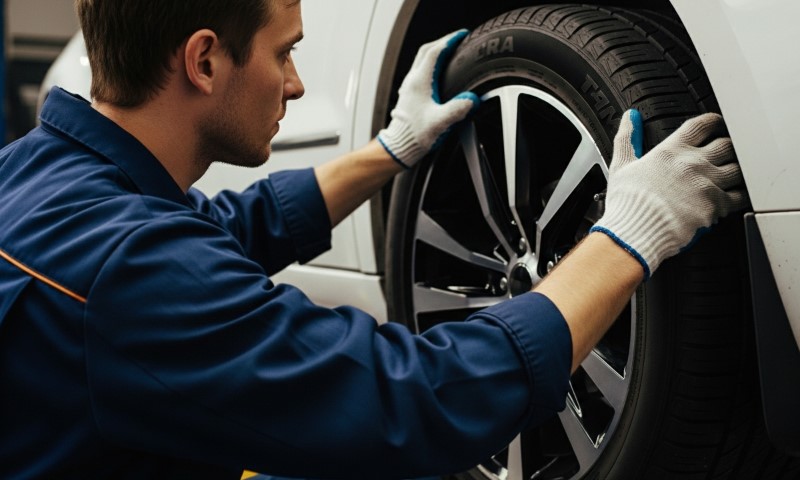
If a car is smooth at 35 mph but shaky at 60 mph, unbalanced tires are one of the first suspects. A tire and wheel assembly does not need much uneven weight to create a noticeable highway-speed vibration.
NHTSA states that balancing ensures wheels rotate properly and do not cause the vehicle to shake or vibrate. Bridgestone and Michelin say much the same.
Common clues include:
- Vibration that grows as speed climbs
- Shake felt most strongly through the steering wheel if the front tires are involved
- A problem that began after tire installation, rotation, or repair
- No major change when braking
In real-world shop work, a balance problem can come from more than a missing weight. The assembly may have been balanced poorly, a weight may have fallen off, or the tire may have shifted on the wheel.
Manufacturer diagnostics in NHTSA records also mention wheel slip and the need to verify tire conditions after mounting.
Uneven Tire Wear or Tire Damage
A tire does not have to be flat to cause vibration. Uneven tread wear, a separated internal belt, cupping, a bulge, or flat spotting can all create a shake once road speed rises.
NHTSA advises drivers to inspect tires for uneven wear patterns, cracks, and other signs of damage or trauma. Michelin notes that irregular wear patterns can be aggravated by speed and poor suspension condition.
Cupped tires are a good example. They often create a rhythmic vibration and road noise that many drivers first blame on wheel balance. In reality, the tire may already be damaged by worn shocks, poor alignment, or a suspension issue. The balance can be corrected, but the tire may still vibrate because the tread shape is no longer even.
A separated belt is more serious. One damaged tire can make the whole car feel rough at speed. Sometimes the tread still looks decent at a quick glance, so the problem gets missed until a technician spins the wheel and sees the tire is no longer running true.
Incorrect Tire Pressure
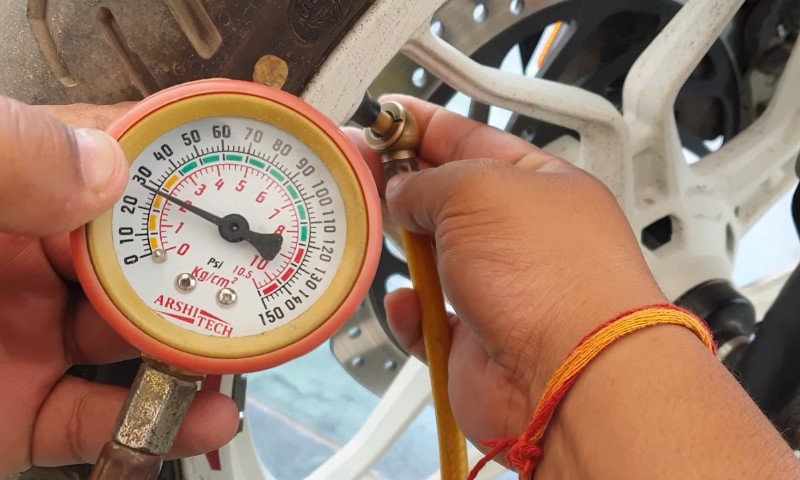
Low or uneven tire pressure by itself is not always the sole cause of a strong highway-speed vibration, but it can make a borderline tire or wear issue more noticeable.
NHTSA says tire pressure should be checked and maintained according to the vehicle placard and that drivers should inspect tires before longer trips. Manufacturer service information also points technicians toward verifying pressures before road testing vibration complaints.
Pressure matters because it affects how the tire contacts the road. A tire already dealing with wear, runout, or internal damage may feel worse when inflation is off. It is one of the easiest checks, and one of the most overlooked.
Bent Wheels or Wheel Runout
A wheel that looks mostly fine can still be bent enough to cause a speed-related shake. Potholes and curb hits are common triggers. Once a wheel no longer spins true, the assembly can create vibration even after balancing.
Manufacturer diagnostic material in NHTSA records repeatedly mentions checking wheels for damage and runout when a vehicle shakes at speed. Some bulletins separate imbalance from runout, noting that a vibration concentrated at a narrower speed window is often more runout-related.
A bent steel wheel may sometimes be repaired. A cracked or badly bent alloy wheel often needs replacement. If the impact was strong enough, alignment and suspension should also be checked at the same time.
Alignment Problems
Alignment problems do not always create a classic vibration on their own, but they often contribute by causing uneven tire wear that later turns into vibration.
NHTSA says alignment helps maximize tire life and helps prevent a vehicle from veering right or left on a straight, level road. Bridgestone also frames alignment mainly as a tire wear, handling, and stability issue.
A common pattern goes like this: the car hits a pothole, alignment shifts, the tires start wearing unevenly, and a few thousand miles later the driver feels a shake at 65 mph. At that point, an alignment alone may not fully solve the problem because the damaged wear pattern is already built into the tire.
Clues that alignment is part of the story include:
- Car pulls slightly left or right
- Steering wheel sits off-center
- Tire edges wear unevenly
- Vibration developed gradually, not overnight
Brake Rotor Problems
If the vibration is strongest when you apply the brakes, brake rotors move near the top of the list. AAA says steering wheel shake while braking can indicate warped rotors.
Manufacturer brake bulletins in NHTSA records describe highway-speed braking symptoms such as pedal pulsation, steering wheel shake, and vibration felt in the vehicle body.
A useful distinction matters here. A car that vibrates during steady cruising at 70 mph is often tire- or wheel-related.
A car that feels fine while cruising but shakes when braking from 70 mph is much more likely dealing with brake rotor thickness variation or another brake issue. Some service information explicitly says vibration while braking points to the brake system rather than a generic balance problem.
Drivers sometimes describe brake vibration as a “warped rotor.” In practice, the exact condition may involve rotor thickness variation, heat-related deposits, or rotor imbalance depending on vehicle design and diagnosis. The key point for a driver is simpler: if braking triggers the shake, have the brakes inspected.
Worn Suspension or Steering Components
Loose or worn suspension parts can either create vibration directly or make another vibration far more noticeable. Manufacturer service documents in NHTSA records tell technicians to inspect suspension and steering parts for looseness, wear, or damage when addressing vibration complaints.
Other service information notes that bad shocks may amplify a vibration that already exists from tires, wheels, or the driveline.
Quick Lane’s consumer education material also lists vibration, noise, and uneven tire wear among suspension warning signs.
Parts that can contribute include:
- Worn tie rod ends
- Ball joints with play
- Control arm bushings
- Worn shocks or struts
- Wheel bearings
A worn shock absorber is a good example of a part that changes how vibration feels. It may not be the original source, but it can let a tire bounce and lose stable contact with the road, which makes the shake worse and tire wear uglier.
Wheel Bearings
A failing wheel bearing more often produces humming, growling, or roughness than a clean highway-speed vibration, but in some cases it can contribute to shake or make the wheel run poorly enough to be felt at speed.
Manufacturer alignment and inspection procedures in NHTSA records include checking wheel bearings for excessive play during diagnosis.
If vibration comes with a droning sound that changes when turning left or right on the highway, a wheel bearing inspection makes sense.
Driveshaft, Axle, or Other Driveline Problems
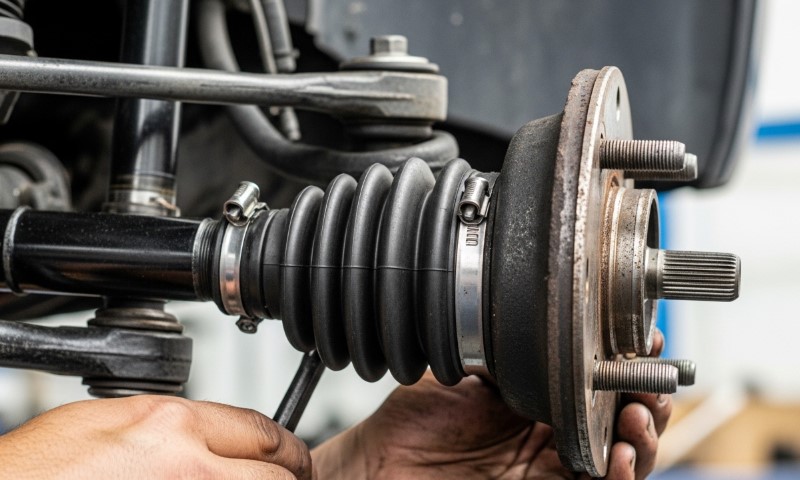
On rear-wheel-drive, all-wheel-drive, and four-wheel-drive vehicles, the driveline can be part of the picture. Manufacturer bulletins in NHTSA records describe highway-speed vibrations that may remain after tire checks and then lead technicians toward the propeller shaft, AWD coupling, axle-related issues, or loose mounting points that transmit vibration into the cabin.
A driveline-related vibration often has a different feel from a basic wheel balance problem:
- It may change with throttle input
- It may be stronger under acceleration or deceleration
- It may be felt more through the floor than the steering wheel
- It may appear in a specific speed range
For example, a worn CV axle on a front-wheel-drive car may vibrate more under load. A driveshaft issue on an AWD vehicle may show up as a steady floor vibration at higher speed. A loose crossmember or worn mounting point can also transmit vibration that originally started elsewhere.
Temporary Tire Flat Spots After Sitting
Cars that sit for long periods can develop temporary tire flat spotting. One NHTSA-linked diagnostic document notes that if a vehicle has been sitting for an extended period, driving it long enough to warm the tires may eliminate flat spots that can cause vibration.
A driver may notice a morning vibration that fades after several miles. If the shake disappears fully once the tires warm up, temporary flat spotting is possible. If it stays, something more permanent may be going on.
What The Location Of The Vibration Can Tell You
Steering Wheel Vibration
A shake in the steering wheel usually points toward the front of the vehicle. Front tire imbalance, front wheel damage, front brake rotor problems, or worn front-end steering parts are common suspects.
If the steering wheel shakes only when braking, look harder at the brakes. If it shakes during steady cruising, start with the front tires and wheels.
Seat Or Floor Vibration
A vibration in the seat, floor, or center of the vehicle often shifts suspicion toward the rear tires, rear wheels, or the driveline. Rear tire imbalance is easy to miss because drivers often expect every tire problem to show up in the steering wheel.
Whole-Car Shake
A whole-body shake can come from a severe tire issue, a major balance problem, a badly bent wheel, or a driveline fault. At that point, continuing to drive fast is a poor gamble.
A Practical Diagnostic Order
@brilliantautocare The customer states the vehicle shakes while driving. First, we test-drove it to verify the shake. once we got that out of the way, I got it up in the air and tested the usual suspension components. after finding no play, we decided to put it in gear and see if we could replicate it in the air and found a bad case of the shakes! The culprit ended up being a bad CV axle. The cage inside the axle broke which caused an imbalance, or as I like to say, the shakes. #mechanic #repair #vehiclerepair #shaking #diagnosis
A sensible diagnosis usually follows a simple order, starting with the most common and most visible causes.
1. Inspect the Tires
Look for:
- Uneven tread wear
- Bulges
- Sidewall damage
- Objects in the tread
- Very low pressure
- Evidence of a shifted or damaged tire
NHTSA recommends checking for uneven wear, cracks, foreign objects, and correct inflation.
2. Check When The Vibration Happens
Ask a few basic questions:
- Does it start around one speed, like 55 mph?
- Does it get worse above 70 mph?
- Is braking the trigger?
- Does acceleration make it stronger?
- Did it begin after new tires or after hitting a pothole?
Answering those questions often saves time and money because it points the inspection in the right direction.
3. Get The Wheels Balanced And Checked For Damage
A plain rebalance is often the first repair attempt for a reason. If that does not fix it, the shop should check wheel runout, tire road force issues if equipment is available, and mounting quality.
4. Check Alignment And Suspension
If tires show uneven wear or the car pulls, alignment should be checked. Suspension and steering parts should also be inspected for looseness or wear.
5. Inspect Brakes If Braking Changes The Symptom
Brake pulsation, body vibration under braking, or steering shake under braking should move brake inspection higher on the list.
6. Move To Driveline Diagnosis If Tire And Brake Checks Come Back Clean
On AWD, 4WD, and RWD vehicles, especially, a prop shaft or axle issue may be next. Manufacturer bulletins show that some highway-speed vibration cases only resolve after tire and wheel checks are followed by driveline inspection.
When You Should Stop Driving And Get It Checked Soon
Some vibrations are annoying but not urgent. Others are different. Get the car checked promptly if you notice any of the following:
- A bulge, cut, or exposed cords on a tire
- A vibration that suddenly became severe
- Steering shake combined with poor control
- Brake vibration strong enough to affect stopping smoothness
- Noise from the wheel area along with vibration
- A shake after a major pothole or curb impact
- A check engine light plus vibration during acceleration
A severe tire failure risk is the biggest reason not to ignore a sudden new vibration. NHTSA tire safety guidance puts strong emphasis on inspecting for damage, correct inflation, and visible wear problems.
The Bottom Line
Most high-speed vibrations start with tires and wheels, especially balance problems, uneven wear, damaged tires, or bent wheels.
Brake rotors move higher on the list if braking brings the shake out. Suspension, steering, and driveline issues matter too, especially when the vibration changes with load, road impact history, or speed range.
A careful symptom description often points the shop in the right direction before a wrench even touches the car.