
Honda Civic has earned a long-standing reputation for efficiency, low running costs, and solid longevity. Plenty of Civics go well past 200,000 miles with sane maintenance.
Even so, not every model year deserves the same confidence. A few years picked up serious black marks, from automatic transmission trouble and cracked engine blocks to A/C failures, oil dilution complaints, and steering-related recalls.
For anyone shopping used, year matters almost as much as mileage. A clean-looking Civic can still hide a known pattern that turns a good deal into a repair bill.
Honda Civic Years That Deserve Extra Caution
Used-car shoppers do not need to avoid every Civic, but a few years deserve closer inspection than the rest.
| Model year | Main trouble spots | Why buyers get cautious |
| 2001 | Automatic transmission concerns, ignition interlock issue | Early-2000s cars picked up transmission-related defect scrutiny and a roll-away related interlock issue |
| 2006 to 2008 | Cracked engine block, coolant leaks, overheating | Honda later extended engine-block warranty coverage up to 10 years |
| Early 2009 | Same engine block concern on some cars | Not every 2009 is affected, but early-production cars made Honda’s bulletin |
| 2012 | Driveshaft recall, EPS complaints | First-year redesign had notable trouble signals |
| 2016 | Electronic parking brake recall, A/C condenser failures, 1.5T issues on affected trims | One of the busiest recent Civic years for service campaigns |
| 2017 to 2018 | A/C condenser leaks, A/C compressor shaft seal leaks, some 1.5T drivability complaints | Honda issued major warranty extensions tied to climate-control and engine drivability concerns |
| 2022 to 2025 | Steering gearbox recall on affected vehicles | Newer Civics are generally better, but steering-related recall history matters |
The Worst Honda Civic Years to Watch Closely
Some Honda Civic years earned their reputation the hard way, with recurring complaints and documented defects that turned routine ownership into a far more expensive and frustrating experience.
2001 Honda Civic
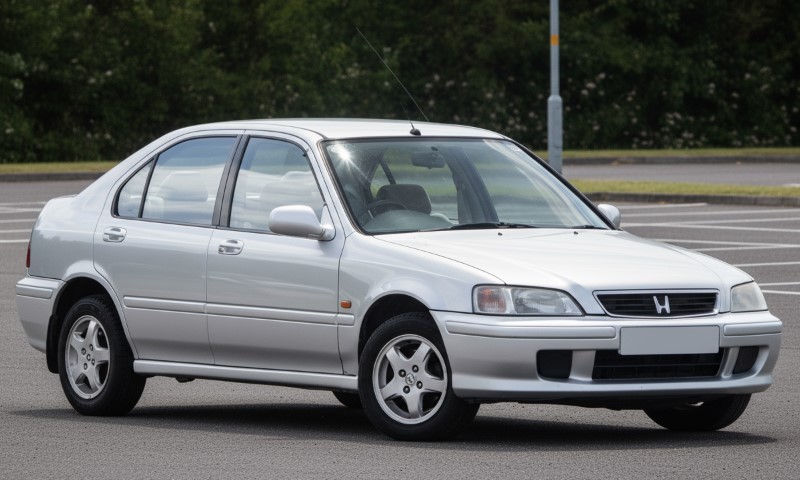
For many longtime Honda fans, 2001 marks one of the earliest Civic years that can turn ownership sour if service history is weak.
NHTSA records tied 2001 Civics to an engineering analysis involving automatic transmission-related complaint coding, and a separate ODI summary described an ignition interlock failure that could let a driver remove the key without shifting into Park, raising roll-away risk.
That ODI summary listed 42 total complaints and 18 crashes or fires across the issue set reviewed.
A 2001 Civic that still shifts cleanly and has clear maintenance records can still be serviceable, but buying one blind is a gamble.
On a car that old, transmission wear is already expensive. Add a history of known complaint patterns, and the margin for error shrinks fast.
2006 to 2008 Honda Civic
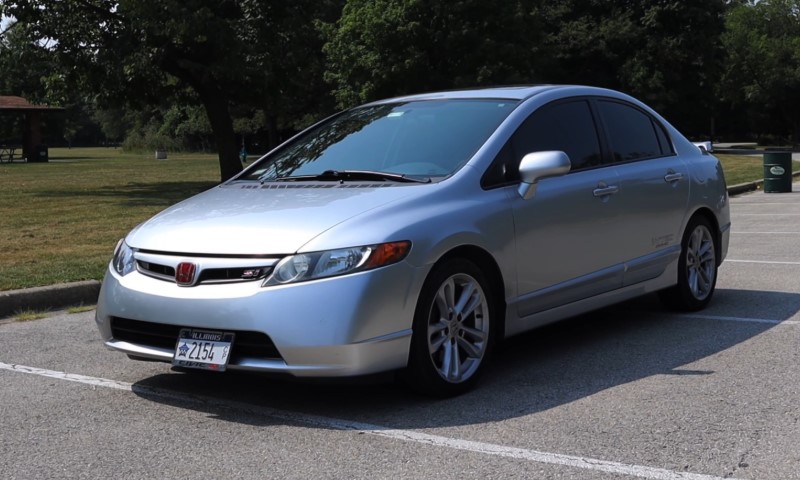
If one Civic issue keeps coming up in used-car discussions for good reason, it is the cracked engine block problem on 2006 to 2008 models.
Honda’s own service bulletin states that some 2006 to 2008 Civics, plus early-production 2009 cars, may leak engine coolant from the cylinder block, which can lead to engine overheating.
Honda extended engine-block warranty coverage to 10 years from original purchase date with no mileage limit for eligible vehicles.
That matters because a cracked block is not a nuisance repair. Coolant loss can overheat the engine, damage related components, and turn a cheap compact sedan into a major repair project.
Honda’s bulletin goes well beyond a simple inspection note. It outlines block replacement, claim procedures, photo documentation, and coverage rules, which tells you the issue was serious enough to require a formal system-wide fix.
Among regret-heavy Civic years, 2006 to 2008 sit near the top for one reason: engine block failure changes the economics of ownership in a hurry.
Early 2009 Honda Civic
Not every 2009 Civic belongs on an avoid list. Early-production cars do deserve extra caution because Honda’s engine-block warranty extension explicitly includes early 2009 production.
Anyone shopping a 2009 Civic should check the VIN carefully and verify whether the vehicle ever qualified for the bulletin, whether the repair was performed, and whether there are signs of coolant loss or past overheating.
A later 2009 car with clean records may be perfectly fine. An early one with mystery coolant consumption deserves a lot more skepticism.
2012 Honda Civic
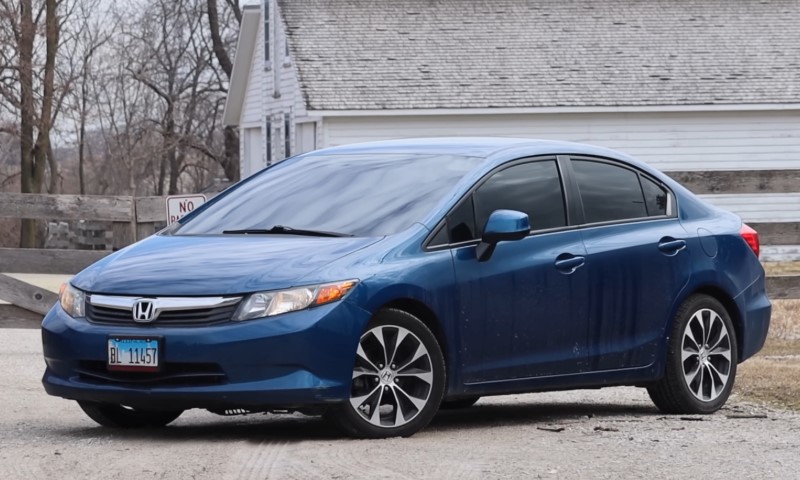
2012 brought a new generation, and first model years often carry extra risk. Honda recalled certain 2012 Civics because the left driveshaft could detach from the constant-velocity joint. Honda’s recall notice warned that if separation occurred, the vehicle would not move in any gear.
That was not the only signal. Honda also circulated an internal investigation request for 2012 to 2015 Civics involving EPS warning lights and, in some cases, loss of power steering assist.
A first-year redesign with driveshaft recall history and electric power steering complaints is not ideal territory for a budget-minded used-car buyer who wants predictability.
Many 2012 Civics have been fine in daily service, but buyers looking for the easiest ownership path usually lean toward later, more sorted years.
The Civic Years That Frustrated Owners With A/C and Turbo Issues
Some Honda Civic years looked promising on paper, but repeated A/C failures and turbo-related complaints left many owners dealing with repairs they did not expect.
2016 Honda Civic
2016 launched another fresh generation, and again the first year carried more baggage than many buyers expected. Honda filed a 2016 safety recall tied to electronic parking brake software.
According to the Part 573 recall report, Honda had received 342 warranty claims by October 4, 2016 before deciding a safety defect existed.
Beyond that recall, 2016 also sits inside Honda’s A/C condenser warranty extension. Honda said condensers on affected 2016 to 2018 Civics were not manufactured to specification, allowing tiny holes to develop in the condenser tube walls and refrigerant to leak out.
On top of that, certain 2016 to 2018 Civics with the 1.5-liter turbo engine landed in Honda product updates and warranty extensions tied to drivability complaints, misfire trouble codes, fuel-rich conditions, and what Honda identified as an engine oil dilution update.
Honda later extended powertrain warranty coverage in connection with some of those 1.5T concerns.
A 2016 Civic can still make sense if records are excellent and the known fixes are documented. Without paperwork, it is one of the years worth checking most aggressively.
2017 to 2018 Honda Civic
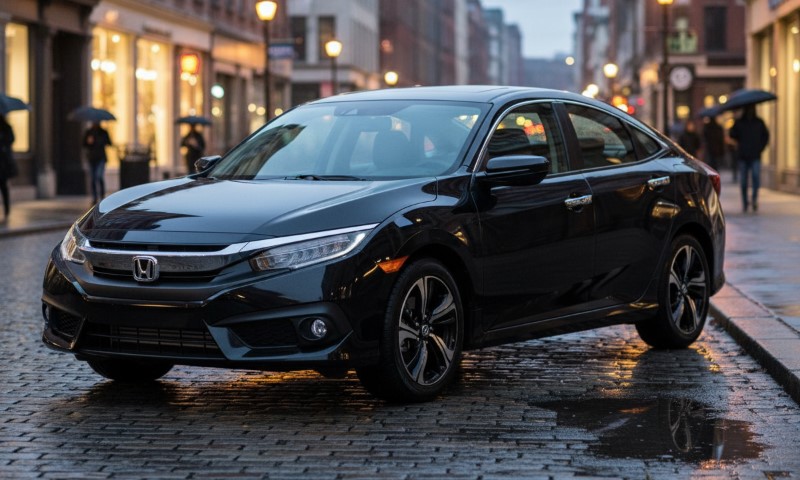
A lot of buyers assume year two or year three of a generation is automatically safer than year one. On 2017 and 2018 Civics, A/C problems complicate that idea.
Honda’s 2019 bulletin extended A/C condenser warranty coverage to 10 years with unlimited miles for affected 2016 to 2018 Civics because some condensers were not built to spec and could develop tiny holes that leak refrigerant.
Honda added another climate-control warranty extension in 2023 for certain 2016 to 2021 Civics, covering A/C compressor shaft seal leakage for 10 years from original purchase date. That campaign points to abnormal rubber seal wear and refrigerant leakage.
For buyers, that means a used 2017 or 2018 Civic with weak A/C is not a random fluke. It matches a documented pattern. Add the 1.5T drivability bulletins affecting some 2016 to 2018 cars, and 2017 to 2018 stop looking like automatic safe bets.
A Newer Problem Area: 2022 to 2025 Honda Civic Steering Issues
Newer Civics usually look far more appealing than older problem years, and in many ways they are. Still, buyers should know that Honda recalled certain 2022 to 2025 Civics because the steering gearbox assembly may have been manufactured incorrectly, causing excessive internal friction and making steering more difficult.
NHTSA’s recall summary says the remedy involves replacing the worm gear spring and redistributing or adding grease as needed.
Honda had already circulated a 2023 service bulletin for 2022 to 2023 Civics covering steering effort complaints at moderate or highway speeds, with a possible steering gearbox malfunction listed as the cause.
I would not put 2022 to 2025 Civics in the same regret tier as 2006 to 2008 or 2016 to 2018. I would say buyers should verify recall completion before purchase and avoid assuming that newer always means problem-free.
Civic Years That Usually Feel Safer
Not every Civic deserves suspicion. Summaries from Consumer Reports rate the 2015 Civic as more reliable than peers from the same model year, while 2019 and 2020 came in around average reliability.
Even that modest edge matters in a used compact segment where repair risk can swing ownership cost more than fuel economy does.
In plain terms, used-car shoppers who want the least drama often feel better aiming for:
- 2014 to 2015, if condition and maintenance history are strong
- 2019 to 2021, after checking trim, engine, and recall history
- any Civic with documented recall completion and consistent service records
Condition still matters more than internet rankings. A well-kept “average” year often beats a neglected “good” year.
How to Shop a Used Honda Civic Without Getting Burned
A used Civic does not need to be perfect. It needs proof.
Before buying, do a few basic checks:
- run the VIN through NHTSA recall lookup
- ask for receipts tied to A/C repairs, engine updates, or steering repairs
- inspect for coolant smell, low coolant, overheating history, or stained engine surfaces on 2006 to early 2009 cars
- pay close attention to A/C output on 2016 to 2018 cars
- test steering feel carefully on 2022 to 2025 cars
- on 1.5T cars, ask whether Honda software updates or related warranty repairs were completed
VIN searches can reveal unrepaired recalls for a specific vehicle, which makes that step one of the easiest ways to avoid a bad purchase.
FAQs
Summary
Honda Civic is still one of the better-known compact cars on the road, but the badge alone does not protect buyers from year-specific trouble.
Among the years that deserve the most scrutiny, 2001, 2006 to 2008, early 2009, 2012, and 2016 to 2018 stand out most. Newer 2022 to 2025 cars also need a steering recall check before money changes hands.
Buy the record, not just the car.